Quality Gurus
- Food Safety
- Certification
This is the question we are asked more than any other in the food practice, and the confusion is understandable: the three names are used interchangeably in tenders, buyer questionnaires and marketing material, yet they are three different things. Choosing the wrong one costs real money: we regularly meet processors who certified to a scheme their target buyers do not recognise, and had to start again.
Here is the actual relationship between them, and how to choose.
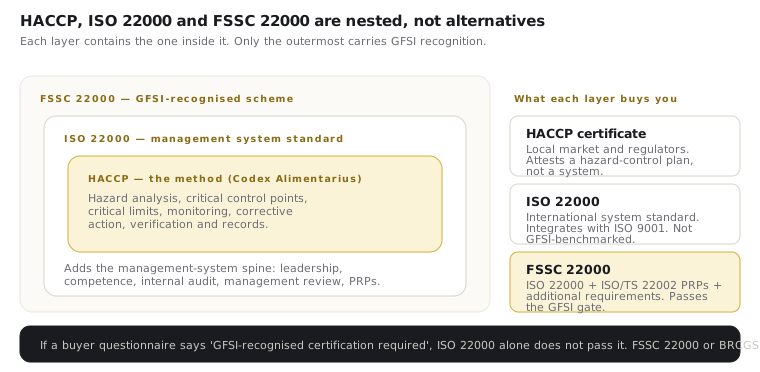
HACCP is a method, not a certificate
HACCP (Hazard Analysis and Critical Control Points) is a methodology: analyse the hazards in your process, identify the points where control is critical, set limits, monitor them, and act when they are exceeded. It is codified in the Codex Alimentarius and it sits inside every serious food safety scheme. You can be "HACCP certified" (local certification bodies offer it), but understand what that certificate is: attestation of a hazard-control plan, not of a full management system. For a small caterer or a local-market producer it may be all a regulator or municipal authority asks for. For export or organised retail, it is almost never enough on its own.
ISO 22000 is a management system built around HACCP
ISO 22000 takes the HACCP methodology and wraps a full management system around it, the same architecture as ISO 9001: leadership commitment, documented processes, competence, internal audit, management review, continual improvement, plus interactive communication down the supply chain and prerequisite programmes (PRPs) covering hygiene fundamentals. If you implement ISO 22000 properly, you have implemented HACCP by definition; the reverse is not true.
ISO 22000 is an excellent choice for food businesses that want an internationally recognised system standard, and it integrates cleanly with ISO 9001 if you already hold it. Its one commercial limitation matters, though, and it leads to the third name.
FSSC 22000 is ISO 22000 plus what GFSI demands
The Global Food Safety Initiative (GFSI) is the retailer-driven benchmarking body whose recognition decides what the world's major food buyers accept. ISO 22000 alone is not GFSI-benchmarked. FSSC 22000 is: it takes ISO 22000, adds the sector-specific prerequisite programme standards (ISO/TS 22002-1 for food manufacturing) and a set of additional scheme requirements (food fraud mitigation, food defence, and more) and the result carries GFSI recognition.
In practice this means FSSC 22000 competes directly with BRCGS and SQF as the certificates multinational retailers, brand owners and serious export customers ask for. If your buyer's questionnaire says "GFSI-recognised certification required", ISO 22000 alone will not pass that gate; FSSC 22000 will.
The decision guide
- Local market, regulatory compliance, small operation: a properly implemented and certified HACCP system may be sufficient, but build it well, because everything else grows from it.
- Growing processor, B2B customers, integration with ISO 9001, no GFSI demand yet: ISO 22000 gives you the full management system with international recognition, and upgrading to FSSC later is an increment, not a restart.
- Export markets, multinational retailers, brand-owner co-manufacturing: go straight to FSSC 22000 (or BRCGS, see our BRCGS audit preparation guide); certifying to ISO 22000 first and upgrading later costs more than one project done once.
- Already ISO 22000 certified and a buyer now demands GFSI: the gap to FSSC 22000 is the ISO/TS 22002 prerequisite detail plus the additional scheme requirements: typically months, not a year, with a focused transition project. Scope it against Version 7, published on 1 May 2026, rather than Version 6 — see our FSSC 22000 Version 7 transition guide for the timeline.
The mistake that costs the most
The most expensive path we see is certifying to whatever the nearest certification body suggested, without asking the only question that matters first: what do my target buyers require? Ask your three most important current or prospective customers which certificates they accept before you commit to a scheme. The answer decides the project.
Practical steps
Map your buyer requirements first. Then have your current hygiene and HACCP foundations assessed against the target scheme: the gap between a working HACCP plan and a certifiable FSSC 22000 system is mostly in the management system and prerequisite detail, and a gap analysis will tell you exactly how many months you are from audit-ready. Our team trains food safety teams in both Arabic and English, from HACCP fundamentals through full scheme implementation.